Hey @Community & @Insiders,
We wanted to give you a heads-up about a change coming to how Speckle stores and serves model data.
What’s changing
We’re moving to a new underlying data model — built to handle much larger models, extract and load faster, and power the direct querying that our newer features, AI included, depend on. It’s a foundational shift, not a visual one: most of you won’t see anything different day-to-day. Under the hood, though, it’s the biggest change we’ve made to how Speckle stores and serves model data since the object model itself.
Why we’re doing it
- Today’s object graph slows down and gets memory-hungry on large models. The new format is built to scale past that.
- Faster publishing, loading, and viewing across the board.
- A real analytical model — Speckle’s data becomes something you can query and aggregate directly, not something you have to reconstruct object by object.
- It’s the foundation our AI features query against, and it’s what lets us keep building on it.
What isn’t changing
Your everyday workflow for modeling, publishing, and viewing stays the same. Once your project has moved to the new data model, the latest connectors will continue to work exactly as they do now — just faster.
Who should pay closer attention?
For almost everyone — desktop connector users, SDK/API consumers, Power BI users, Automate functions — nothing changes. Existing connectors and integrations continue to work with your existing data exactly as they do today.
What you need to do right now
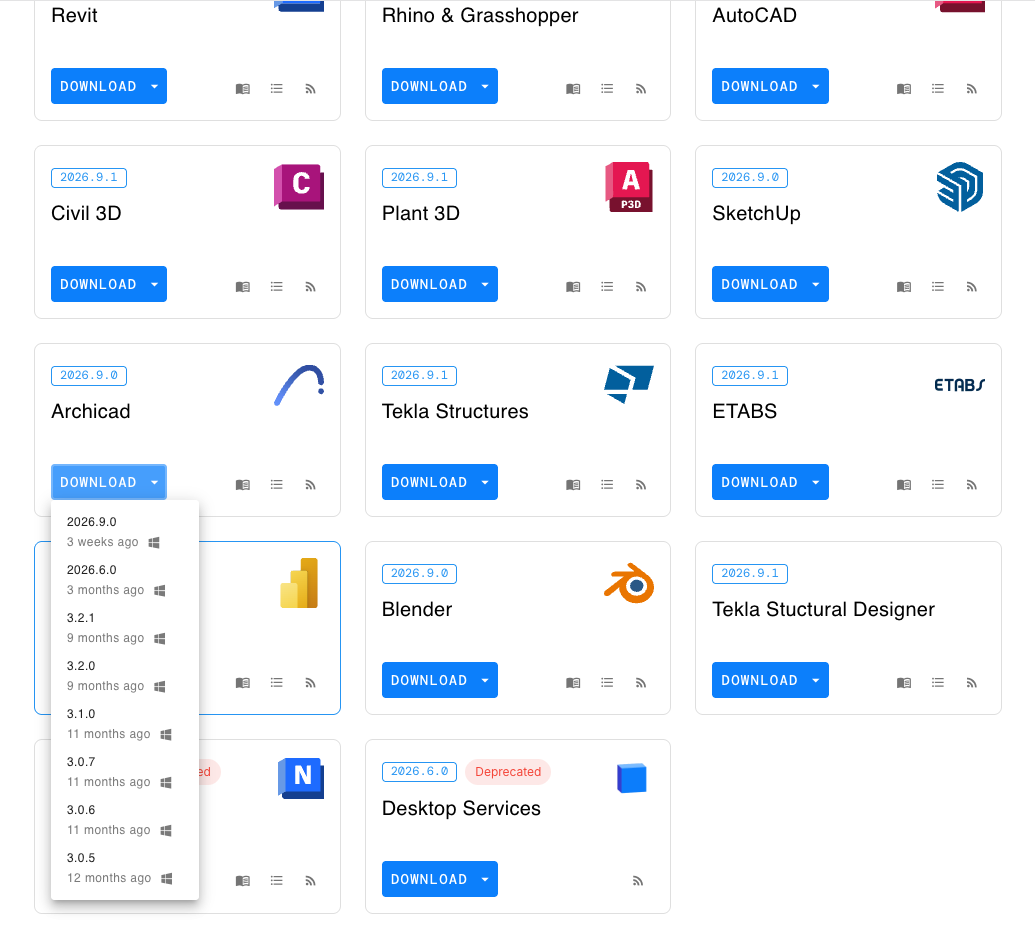
Update your connectors from 1 September — no later than 1 November, when compatibility mode for ACC sync and drag-and-drop goes away. Old connectors keep working either way — this just means getting there without the bumps.
Questions welcome below — we’ll be keeping an eye on this thread, and we’ll also cover this in the docs.
For our insiders — read on if you build directly on Speckle, self-host, or use ACC sync/drag-and-drop
Everything above still applies to you — this is additional, not instead of. Skip it unless one of these is you: you build directly on Speckle (SDK, GraphQL/REST API, Automate functions, or anything reading or writing Speckle data outside the standard connectors), your workspace uses ACC sync or drag-and-drop uploads instead of a desktop connector, or you self-host our open-source core.
ACC sync and drag-and-drop uploads are the exception — both run through Speckle Automate-driven syncs against the old object model. After the migration, that path is off by default. If your workflow depends on it, have your workspace request compatibility mode, which keeps writing the old format while you update — treat it as a bridge, not a fix: it’s retired on 1 November. Full guide: the developer docs.
Running Speckle’s open-source core yourself? You already own your connector distribution — that’s the standard for a healthy self-hosted stack, not something we auto-update for you. If your current connector and server versions work together, pin both — and if you’ve got your own users on top of your deployment, keep them on that same combination too. No timeline yet for the new platform capabilities reaching the open-source core specifically — that’s consistent with how we’ve always handled open-source releases: once a major version’s proven stable, not on a fixed date. We’ll confirm timing once that’s true.
Using ACC sync or drag-and-drop and need to switch compatibility mode on for your workspace? Just ask — full guidance in the developer docs.